Bottega Veneta Ready-to-wear Spring 2026
In amongst the roster of debuts this season sat a newly appointed Louise Trotter. Quietly yet
confidently at the centre of attention, she unveiled a Bottega Veneta defined by a steady recalibration of the Italianhouse’s artisanal genetic codes. “You have to know where a house comes from in order to move forward,” Trotter remarked to British Vogue’s Chiara Barzini – a line that landed less as sentiment and more as strategy.
Fresh from her short stint at Carven, Trotter continues to establish her reputation for respectfully destabilising a house’s heritage through a lens of modern minimalism and functionality.
Leather, Bottega’s anchor, appeared softer in the sartorial and more lived-in, reflecting the busy contemporary wearer; having been sculpted into long-line vests, mid-length wrap skirts, and long-sleeve quilted shirts with a trapeze line cut. The second look, a gathered column dress in an oily tarmac black, was Matrix-esque with its seam running from top to bottom. These looks bore resemblance to the loose, rather oversized structures of her predecessor Matthieu Blazy, but far more broken into in quantity of leather iterations. Silk satin also featured throughout, traversing gathered skirts in champagne and black.
Trotter maximised volume and movement where it mattered. From the flicker of the recycled fibreglass ‘furs’ to the shifting of the loose-fit pleat-front trousers with hems bunched at the ankle, she crafted a collection for the modern wearer in motion, where every fold, drape, and seam moved effortlessly with the body.
In the case of coats, trenches, belted wraps and ankle-skimming tuxedos were aligned in their expression of accentuated shoulders, artisanal lapels and exaggerated intrecciato epaulettes; a softer re-tread of the 1980s powersuit, if you will. Though a neutral colour palette unified the sequence, it was the house’s signature Intrecciato weave that told the story: two strips woven to become stronger. “The language of Bottega Veneta is Intrecciato. And it is a metaphor,” Trotter says. “Collaboration and connectivity run throughout this house and its history, from its beginnings to what it is now.”
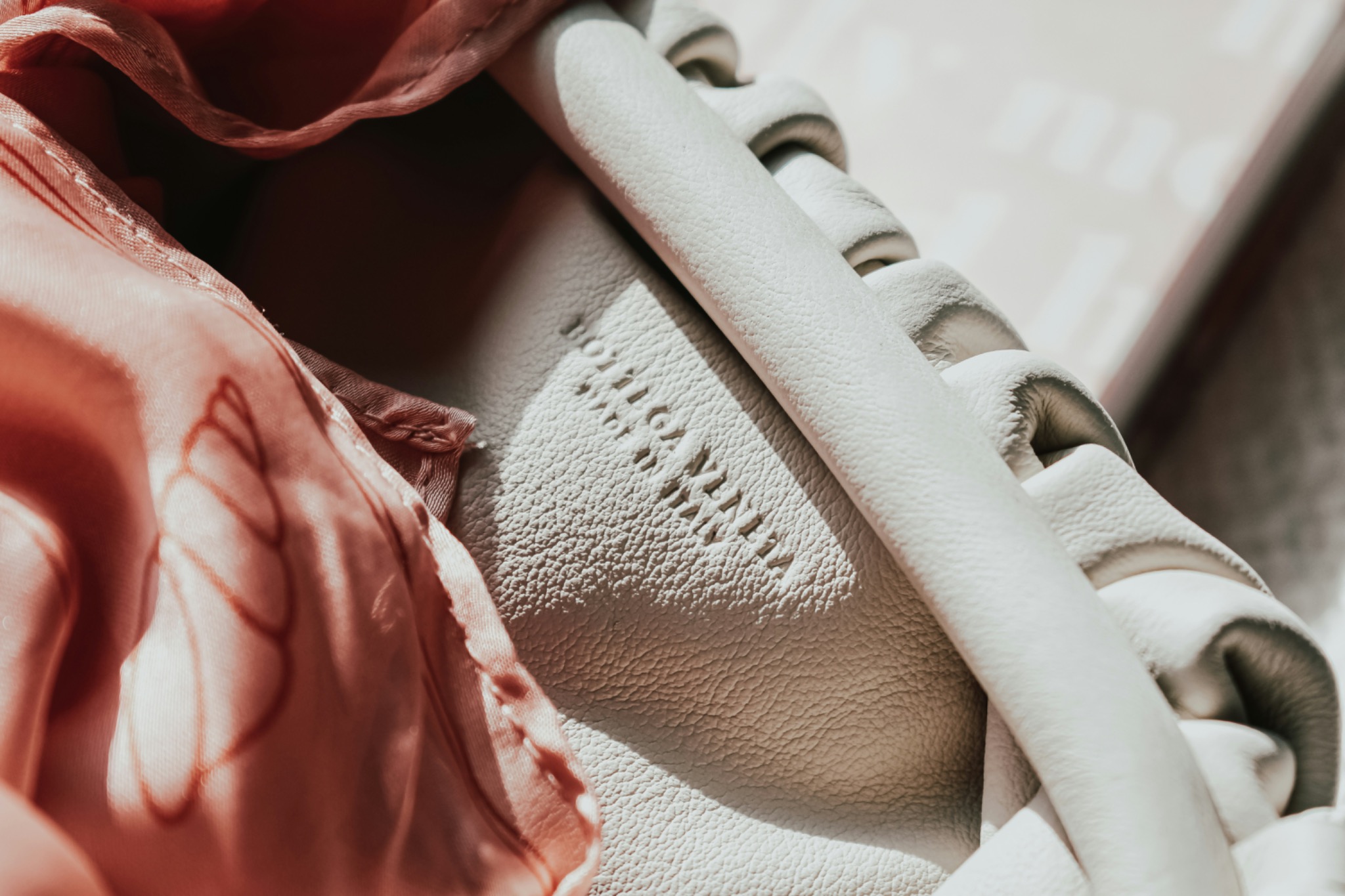
The bags did a lot of the heavy lifting when it came to lineage. Trotter returned to Intrecciato as a point of emphasis, revisiting and reamplifying the woven leather technique that has defined Bottega Veneta since the 1960s, treating it as a through-line rather than a throwback. The Cabat, Lauren, and Knot bags surfaced as markers of the house’s evolution, each tied to a distinct era, yet all unmistakably Bottega. The spirit of the 1980s, in particular, seemed to run through the room. Laura Braggion, the house’s first female creative director appointed in that decade, was present, as was actress Lauren Hutton, forever linked to the Lauren bag and its American Gigolo moment.
As the only woman debuting at the Milanese catwalks this season, Trotter carried this responsibility with calm confidence. On her fit with Bottega, fashion writer Laia Farran Graves notes that Trotter’s success at Carven and her distinct aesthetic is “very adaptable to Bottega, as a heritage brand that focuses on craftsmanship and things well-made. It is a massive part of their story. I think she’s a really good fit.” Trotter may have stepped in softly, but she is certainly already leaving her mark.
*Photo by Harper Sunday on Unsplash
Post a comment